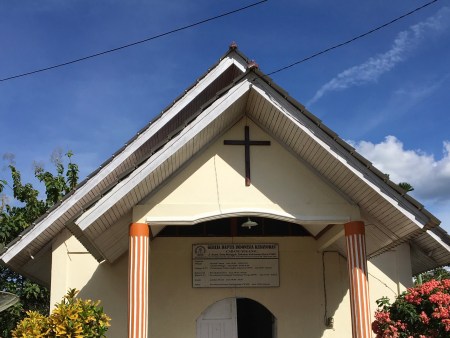
“Every flock should have its own pastor, and every pastor his own flock. As every troop or company in a regiment of soldiers must have its own captain and other officers, and every soldier knows his own commander and colors; so it is the will of God, that every church should have its own pastors, and that all Christ’s disciples should know their teachers that are over them in the Lord”
Richard Baxter
In the 17th century, Richard Baxter commented on a troubling church polity trend. He argues that every individual church should have their own pastor. I have heard a few Southern Baptist leaders affirming and even celebrating one man pastoring two distinct churches at the same time. In conversation, one indicated that this may be an answer to the pastor shortage that we are currently facing. This cannot be the answer to the pastor shortage. In fact, it may be this kind of thinking that has contributed to our pastor shortage.
Out of Order
“This is why I left you in Crete, so that you might put what remained into order, and appoint elders in every town as I directed you” (Titus 1:5).
“And when they had appointed elders for them in every church, with prayer and fasting they committed them to the Lord in whom they had believed” (Acts 14:23).
The assumption of Paul’s church planting ministry was that a church is out of order until elders have been appointed to shepherd that church. It seems that Paul would ideally appoint multiple elders to shepherd one congregation. This is a far cry from having one man shepherd multiple congregations. If this was the apostolic ideal, why would it not be ours? Paul did not consider himself to be the shepherd over the multiple congregations that he himself planted, rather he labored to establish local pastors in each church. Without the establishment of those local leaders, the church remained out of order and susceptible to false teaching, unaddressed sin, and divisiveness.
The Flock Among You
Pastoring is more than preaching. It is more than funerals and weddings. Pastoring is not a spiritual service that a man provides to a corporate gathering on Sundays. Shepherding requires a degree of presence. Peter writes, “I exhort the elders among you… shepherd the flock of God that is among you, exercising oversight… being examples to the flock” (1 Pt. 5:1-2). Paul exhorts, “Pay careful attention to yourselves and to all the flock in which the Holy Spirit has made you overseers, to care for the church of God” (Acts 20:28). The assumption again is that multiple overseers care for an individual church. Pastors are to pay careful attention to their flock to protect them from false teaching. They are to set an example for their flock and exercise oversight over their flock. There is no precedent biblically or even pragmatically that one man can or should attempt to shepherd two flocks at the same time. It seems that the wolves would be happy to hear that one shepherd is splitting his time between two flocks in two locations.
What is the Alternative?
Not all ministry situations are ideal. There may be some circumstances that force a church or pastor into a situation where the best temporary option is for one pastor to shepherd two flocks in two locations. That situation, though perhaps unavoidable for a season, should not be accepted as the ideal. There is much work to be done. The work of the ministry for that pastor and for those churches is the work Paul called Timothy to, “Entrust to faithful men who will be able to teach others also” (2 Tim 2:2). God gifts faithful men to the church, but the work of the ministry is an entrusting ministry, a discipling ministry, so that men are called out from the flock and equipped for the work of pastoring. This kind of work may be long and difficult, but it will yield more fruit in time. Today’s pastor shortage may be due to yesterday’s well-intentioned pragmatism which prioritized immediate and wide influence at the expense of deep and lasting discipleship.
Leave a Reply